
The Boy Who Started a World War

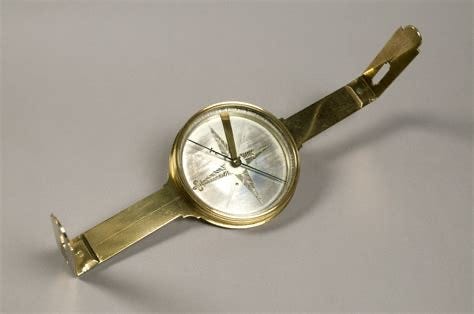
A surveyor’s compass is a tool for not getting lost. You sight a line, you trust the needle, you mark where you are against where you mean to go. George Washington owned one at seventeen and used it hard, walking off the edges of other men’s property in the Virginia backcountry for money, because he was a third son with no inheritance and a sharp sense of exactly how far down the ladder he stood.
The compass survives. You can go look at it. And it is a very short walk from a brass instrument to a marble man, from the steady hand to the fixed purpose to the boy who always knew his bearing.
So let me point the needle somewhere else. Five years after he was sighting property lines, the same young man stood over a dying French officer in a Pennsylvania ravine and wrote a report so wrong it set three continents on fire.
He was twenty-two.
The official story is always the compass. It is never the ravine. The compass points toward Washington. The ravine points toward George.
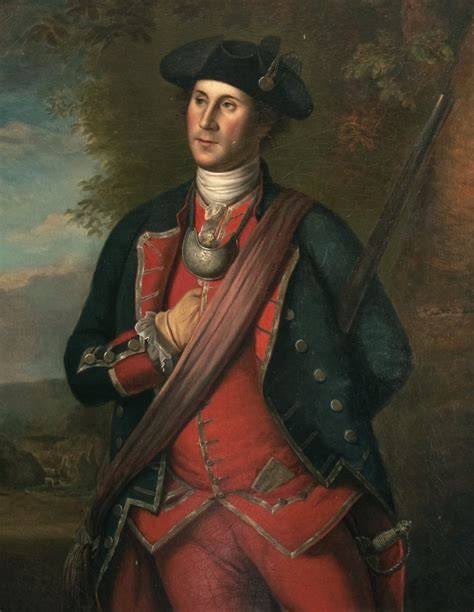
Let me back up, because the myth wants you to start with the cherry tree and the powdered hair and the calm. The actual George Washington was ambitious the way the young are ambitious, which is to say smart enough to accomplish remarkable things and green enough to have no idea what he was actually doing. Undereducated. Status-starved. Terrible French. A borrowed sense of his own destiny that he had not yet earned and could not yet tell apart from vanity. He did not want to found a republic. In 1754 he wanted one thing with an intensity that would embarrass his later biographers: he wanted a commission in the British Army. A real one. The King’s, not Virginia’s. He spent years of his young life chasing the validation of an empire that would, repeatedly and humiliatingly, decline to give it to him.
The French and Indian War suffers from the problem of every prequel that secretly explains the entire franchise. Nobody wants to sit through it, because they already know how the saga ends, and so it gets taught, when it gets taught at all, as the dull throat-clearing before the good part. The warm-up act. This is a mistake. The Revolution makes very little sense without it, and neither does Washington, and neither, for that matter, does the map of North America. It is not the prologue to the man. It is the foundational text, and it reads less like a heroic origin story than like a case study in a young person’s overreach colliding with forces he did not begin to comprehend.
Here is what happened at Jumonville Glen. The British wanted the Ohio Country. So did the French. So, crucially and inconveniently for everyone, did the Indigenous nations who actually lived there. Washington, freshly minted as a lieutenant colonel in the Virginia militia, was sent west to assert a claim. He was operating on intelligence from his ally Tanaghrisson, a Seneca leader the British called the Half King, a man running his own political game that had nothing to do with Virginia’s land speculators and everything to do with Iroquois power in the region.
Washington and his men ambushed a small French party at dawn. There was a brief, chaotic fight. The French commander, Joseph Coulon de Villiers de Jumonville, was wounded and taken. And then, by most accounts, Tanaghrisson walked up to the captured, injured man, said something in French about him not being dead yet, and split his skull open with a hatchet.
Washington was standing right there.
The violence is not the worst part. What Jumonville was carrying is. The French insisted he was a diplomatic envoy. He had papers. He was, by their account, on a mission to deliver a warning, not to wage a war, which means Washington had presided over the killing of a man with diplomatic standing and then, in his official report, dressed the encounter up as a victory in battle. To Paris it was the murder of an envoy carrying a summons. Both versions sailed back across the Atlantic into a Europe that was already a powder keg, and the powder caught.
The conflict metastasized into the Seven Years’ War, which is the thing your European history professor will insist is the real first world war, fought in the Ohio Valley and the Caribbean and India and the coast of West Africa and the plains of central Europe, killing well over a million people. Horace Walpole wrote the line everyone quotes, that a volley fired by a young Virginian in the backwoods of America had set the world on fire. He meant it as a witticism. It was also just true.
And the young Virginian’s reward for igniting global catastrophe? Within weeks, surrender.
This is the part the marble version really does not want. After Jumonville, Washington pulled his men back and built a hasty stockade in a swampy meadow and named it Fort Necessity, which is what you call a fort when you have read the room and the room is a war you started. The French came for him, the brother of the man killed in the ravine among them. It rained. The trenches flooded. The position was indefensible, chosen badly, sited low. Washington’s men were soaked and outnumbered and out of luck, and he signed terms of surrender written in French, a language he could not read, which means he put his name to a document that explicitly described the death of Jumonville as an assassination. He effectively signed a confession to an assassination he did not know he was confessing to, because he could not read the paper.
It was the only time in his entire military life he ever formally surrendered an army. It happened on the Fourth of July, 1754.
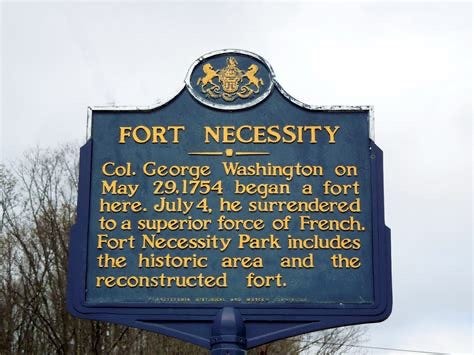
The timing is the kind of thing a novelist would cut for being too neat. Twenty-two years to the day before the Declaration, the future commander of the Continental Army was standing in a flooded ditch in western Pennsylvania, signing his name to a French confession of murder, having just helped start the largest war the world had yet seen.
What does a person do with a year like that.
What Washington did was want the commission more. That is the engine of the early man. He had been humiliated, and the humiliation did not break the ambition, it concentrated it. He kept campaigning. He attached himself to General Braddock’s catastrophic 1755 expedition, the one that ended with British regulars cut to pieces and Braddock dead and Washington riding through the slaughter with bullets through his coat and two horses shot out from under him, conducting himself with a coolness that finally, finally got people to notice. He was brave. Genuinely, almost suicidally brave. He had four bullet holes in his clothing and not a scratch on his body, and he came out of it convinced he was being kept alive for something.
But the British still would not commission him. He went to Boston in person to plead his case to the commander-in-chief of North America and got nothing. He was, in the eyes of the regular army, a provincial. A colonial. Talented, useful, brave, and fundamentally not one of them, never going to be one of them, the social ceiling pressing down on a man who had spent his whole life convinced he was meant to rise through it.
Picture it for a second, because you already know this feeling. You have wanted into a room that kept telling you, always politely, always with excellent manners, that you were not quite the right sort of person. Maybe it was a job, or a family, or a friend group, or an institution with a logo you wanted on your chest. You did everything right and stayed not-quite-enough anyway, and the ceiling was glass so you could watch the people above it not think about you at all. Now hold that, and imagine that instead of getting over it, you went and founded a country.
The thing the empire taught George Washington, slowly and through a decade of small refusals, was that the British system was not a ladder he could climb. It was a wall he could only ever press his face against. He learned its drill and its tactics and its contempt. He learned exactly how a colonial gentleman was valued and exactly how he was not. The man who would face down that same army at Yorktown was educated, thoroughly and personally, in its institutional disdain, by an apprenticeship in wanting to belong to it.
The compass is true. He was precise. He did measure his way toward greatness, and the needle really did hold steady. It just never pointed where we say it did. It points back through the rejection that made the greatness, through the steady hand that signed a confession it could not read, through the boy who spent his youth desperate to be a loyal son of a country that did not want him, and the empire’s refusal to have him is the reason it eventually had to.
He wanted to be a British officer so badly. They would not let him. So he became something they had no rank for.
Wow, that was an amazing read.
I think that the resentment factor of American upper-class not being welcomed or recognized by the British upper class was a major, major driving fact of the revolution. Nobody likes to hit a ceiling. Nobody likes to be watching the party through the glass. The ambition to not be second-tier anything was real.